Leave it on while you are using the RV, and switch it off when the RV goes into storage. That is what builders' manuals say the switch is for. What it actually cuts, and whether the battery still charges with it off, depends on how your RV was wired, so check your own manual.
The RV Battery Disconnect Switch: What It Cuts and When to Use It
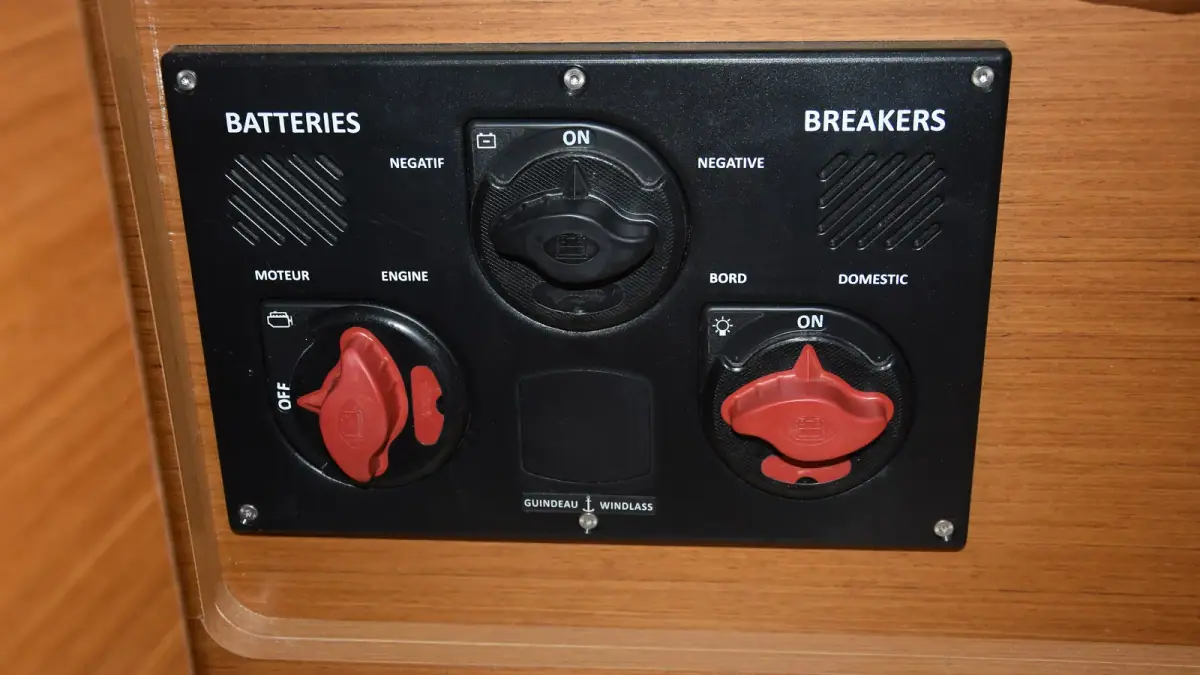
At a glance
- On to camp, off to store: Keystone says the disconnect is typically used to keep the battery from discharging during storage.
- It does not cut everything: Winnebago says its switch shuts off 12-volt power to the main fuse panel and the interior, not all power.
- Charging with it off varies: Winnebago says the converter can still trickle charge; switch maker Intellitec says to disconnect the batteries during long plugged-in storage.
On this page (7)
Should it be on or off?
On while you are in the RV, off while it sits. With the switch off, the interior 12-volt circuits are dead: lights, water pump, fans and furnace board. In storage, that stops those loads from flattening the battery.
The switch alone is not a storage plan. Forest River says a battery still loses charge after 30 to 45 days with the switch off. Check it once a month and recharge it at 80% or less, because a discharged battery will freeze and crack the case. Grand Design also says to take the cables off the battery terminals for storage.
What it actually cuts
It cuts most of the RV's 12-volt power, but not all of it. Winnebago's 2026 towables manual says the switch shuts off the main 12-volt fuse panel and the interior, and some devices still get power. Keystone's 2027 manual says the same: most, but not all, fuse panel loads.
What stays live depends on the builder:
- Keystone: radio memory, LP/CO detectors, leveling jacks and slide-outs may stay connected.
- Jayco Class C: the power entrance steps and the CO/propane alarm still work.
- Grand Design: all 12-volt safety items stay on.
Tip: Never use the disconnect to quiet a carbon monoxide alarm. Jayco says to leave the alarm alone and wait outside for CO levels to drop.
Does it still charge with the switch off?
It depends on which side of the switch your converter sits, and builders differ. Winnebago says its converter can still trickle charge with the switch off. Go by your RV's manual; how an RV battery charges covers the rest.
Tip: If the converter is wired on the circuits' side of the switch, the battery does not charge with the switch off, even with the RV plugged in. Solar is often separate: Keystone fits its own solar disconnect switch near the charge controller, and Grand Design gives its solar controller a separate disconnect switch.
Towing: off or on?
Builders differ, so follow your own manual. Jayco and Keystone both say to switch it off before towing; Jayco's reason is that things inside the RV can switch on unexpectedly. Jayco also says a charged battery must be installed, because it powers the breakaway system. Winnebago says never to tow without the trailer battery hooked up and fully charged.
Motorhomes: house and chassis batteries
A motorhome has two battery banks, house and chassis. With the ignition off, an isolator keeps them apart so using the coach does not drain the starting battery; with the engine running, it joins them so the alternator charges the house batteries. If the chassis battery is low, the Battery Boost switch or Auxiliary Start button joins the banks to help start the engine. Intellitec, which makes these switches, sells disconnects for the house batteries alone or for both banks.
Fitting one, and on which cable
A disconnect goes on the positive battery cable. Victron's Wiring Unlimited says to isolate only the positive cable, with a switch rated for full-load current, because some switches cannot break DC current under load. On Intellitec's relay, the battery cable goes on the side marked BATTERY and the circuits on the side marked LOAD. Battle Born says all cables and connections must handle the high currents its batteries can deliver.
This is wiring work, and Jayco's towable manual says it should be done by qualified electrical technicians. Before starting, unplug the RV, turn off the generator and disconnect the negative battery terminal, the same order as for connecting or removing batteries.
Lithium batteries are stored differently. Battle Born says to charge to 100%, then remove the negative cable from one battery. Renogy says to store its Pro Series battery at 30% to 50%, disconnected, and charge it every three to six months. More in switching an RV to lithium.
Common questions
Should the battery disconnect be on or off when the RV is plugged in?
If your converter charges through the switch, leave it on so the battery stays topped up. For a week or more plugged in, Intellitec advises disconnecting the batteries to prevent overcharging.
Should a battery disconnect switch go on the positive or the negative cable?
A fitted switch goes on the positive cable. Taking the negative terminal off first is for working on the batteries by hand, which Grand Design and Jayco both say to do before any electrical work.
What is the difference between a battery disconnect and a battery isolator?
A disconnect switches one battery bank on or off. An isolator sits between two banks and lets both charge without one draining the other. On a towable, Winnebago's isolator is a customer-supplied device in the tow vehicle that charges both batteries and keeps the RV from draining the tow vehicle battery.