Match the ball to the trailer, not to the truck. The ball diameter has to be the same size as the one marked on your trailer's coupler, and the ball's rated capacity has to cover what the loaded trailer weighs. Most travel trailers run on a 2 inch or 2-5/16 inch ball.
Trailer Hitch Ball Sizes: 1-7/8, 2 and 2-5/16 Inch, and Which One You Need
Some links on this site are affiliate links: if you buy through them we earn a commission, at no extra cost to you. As an Amazon Associate we earn from qualifying purchases.
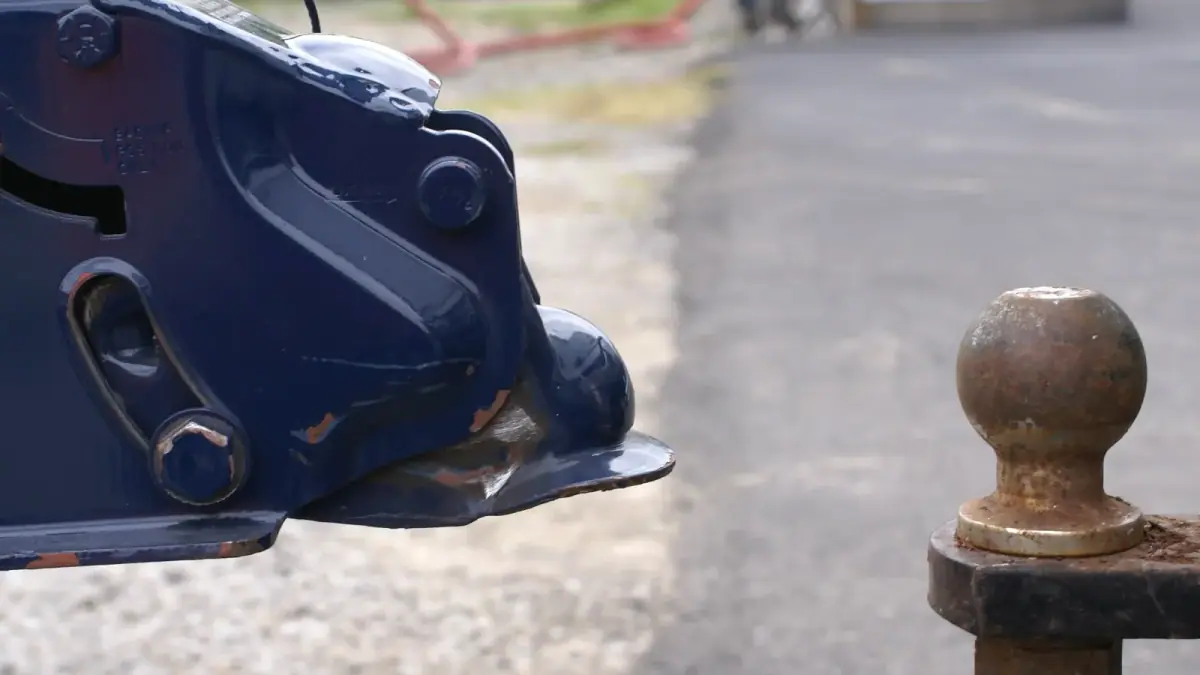
At a glance
- Size: the coupler decides, and CURT warns that a ball and coupler that do not match can lead to the trailer coming off.
- Rating: a 2 inch ball runs 3,500 to 12,000 lb at CURT, so read the capacity of the exact ball you buy rather than judging by diameter.
- Level: the drop or rise you need is the difference between your receiver height and your coupler height, and it is set by the ball mount, not the ball.
On this page (7)
Our picks
- CURT 40070 2 inch trailer ball, 7,500 lb, 1 inch shank: a 2 inch ball rated above a 7,000 lb trailer
- CURT 40007 2-5/16 inch trailer ball, 10,000 lb, 1 inch shank: for 2-5/16 inch couplers; a 1 inch shank nut takes 250 ft-lbs
- CURT 21200 reducer bushing, 1-1/4 to 1 inch: runs a 1 inch shank ball in a mount with a 1-1/4 inch hole
- LEXIVON 1/2 inch drive click torque wrench, 25 to 250 ft-lb: reaches the 250 ft-lbs a 1 inch shank needs
What size ball does my trailer need?
The size is on the coupler. CURT says most manufacturers stamp or label the correct ball size on the coupler itself, and that you can also measure the inside opening of the coupler with a ruler or tape. That measurement is the ball size you need.
Never mix sizes. CURT states the ball diameter should be exactly the same as the inside opening of the coupler, and that a mismatch can create an unsafe towing situation that may lead to a vehicle-trailer disconnect. Its ball installation sheets put it plainly: if the ball size does not match the coupler, the trailer could become uncoupled. Bulldog's coupler instructions say to use only the ball indicated on the coupler body, and Dutton-Lainson's say to use the coupler only with the specified ball size.
CURT lists four standard sizes: 1-7/8, 2, 2-5/16 and 3 inches, measured as the diameter of the ball. It calls 2 inches the standard size because most trailers have a 2-inch coupler, and because a 2-inch ball is the best fit for most of the class 3 hitches that dominate the market. For travel trailers specifically, CURT says the ball is usually a 2-inch or a 2-5/16-inch, and that most weight distribution hitches come with a 2-5/16-inch ball as standard.
Tip: Nothing about your truck sets the ball size. Ford prints in its 2026 towing guide that hitch receivers do not include a hitch ball or ball mounting, and that the owner is responsible for obtaining the proper ones. Chevrolet's 2026 trailering guide says only to make sure the ball diameter matches the trailer coupler. Both point back at the trailer.
What each size is rated for
| Ball size | Rated for (gross trailer weight) | Shank diameters |
|---|---|---|
| 1-7/8 in. | 2,000 to 3,500 lb | 3/4 to 1 in. |
| 2 in. | 3,500 to 12,000 lb | 3/4 to 1-1/4 in. |
| 2-5/16 in. | 6,000 to 30,000 lb | 1 to 2 in. |
Figures from CURT's trailer ball size chart, which adds that capacities and dimensions vary by part number.
The ranges overlap, so a bigger ball is not automatically a stronger one: CURT's 2-5/16-inch line starts at 6,000 lb while its 2-inch line reaches 12,000 lb. Within a single diameter it is the shank diameter and the design that set the rating, not the ball size. Read the capacity of the ball you are buying. CURT also lists a 3-inch ball at 30,000 lb, but that is a gooseneck ball, not something that bolts into a receiver ball mount.
What size ball for a 7,000 lb trailer?
The diameter still comes from the coupler. What the weight changes is the capacity you have to buy. CURT says a trailer ball's rating is listed as the ball capacity, and that it is a gross trailer weight limit rather than a tongue weight figure, so you need a ball whose capacity exceeds the gross weight of your trailer. Reese words it against the trailer's maximum: the ball must be rated equal to or greater than the trailer's GVWR, the most it is allowed to weigh loaded. Chevrolet asks for a ball that meets or exceeds the gross trailer weight rating.
In CURT's standard 2-inch line, the balls with a 3/4-inch shank are rated 3,500 lb, short of a 7,000 lb trailer. Most of its 2-inch balls with a 1-inch shank are rated 6,000 lb, also short. The ones that clear 7,000 lb start at 7,500 lb, so the part number matters more than the size.
A ball rating is not a system rating. CURT's installation sheets say the ball's rating represents the ball alone, and that you should never exceed the limit of the lowest-rated component in use. Bulldog says the same from the coupler end: do not exceed the lesser of the mounting bracket, coupler, hitch, vehicle, ball or trailer ratings. Your own coupler's size and capacity are in the stamped markings or decals on it; on the ball, CURT says the diameter is stamped into the top, while the capacity is published as the ball capacity for that part.
The shank and the hole in the ball mount
The ball's threaded shank bolts through the hole in the ball mount platform. CURT says to know the diameter of that hole and choose a ball with a matching shank diameter, because a shank that is too small will shift while towing and will likely come loose. Where the shank is smaller than the hole, a reducer bushing can make up the difference: CURT's bushings take a hole from 1 inch down to 3/4 inch, from 1-1/4 inch down to 1 inch, or from 1-3/8 inch down to 1-1/4 inch. Reese supplies a bushing for the same reason, to run a 1-inch-shank ball in a ballmount with a 1-1/4-inch hole. A shank larger than the hole simply means the ball is not for that mount.
How do I get the trailer to sit level?
GM is blunt about why this matters: towing with a trailer that is not level can load the trailer's axles, springs and tires incorrectly, which can lead to sway, trailer damage or a tire blowout, and its 2026 Silverado and Sierra towing supplement says not to tow a trailer that is not level. The fix is a ball mount with the right drop or rise. CURT's measuring method is four steps:
- Stand the tow vehicle and the trailer on level ground, as CURT's diagram shows them.
- Measure from the ground to the top of the inside of the hitch receiver opening.
- Measure from the ground to the bottom of the trailer coupler.
- The difference between the two is what you need: a drop if the coupler sits lower than the receiver, a rise if it sits higher.
Keep ground clearance in mind as well. B&W recommends at least 11 inches between the ground and the lowest part of the hitch, and says the 3-inch drop suits most vehicles, with 5, 7 or 9-inch drops for pickups on oversized tires or a lift kit. Many mounts can be flipped in the receiver for rise, but CURT warns that not all models can safely be used in the rise position, and an adjustable mount is the sensible choice if you tow trailers with different coupler heights. Reese adds one placement rule for its adjustable mounts: always offset the ball mount toward the trailer tongue, never toward the tow vehicle.
Rise usually costs you capacity. Reese warns that raised balls generally have reduced load ratings, and its 21141 adjustable utility ball mount is rated 5,000 lb gross trailer weight in the drop position and 3,500 lb in the rise position. Check the rating for the position you actually use. If you tow with a weight distribution hitch, the height is set as part of that hitch's setup rather than by a plain ball mount.
Tip: The ball does not set the trailer's attitude; the mount does. Ford's accessory square-shank ball mounts are listed as usable in the raised or dropped position to match trailer coupler height, and the same ball goes on either way round. If the trailer noses up or down, change the mount, not the ball.
Fitting the ball: torque and the lock washer
| Ball shank | Nut torque |
|---|---|
| 3/4 in. | 160 ft-lbs |
| 1 in. | 250 ft-lbs |
| 1-1/4 in. | 450 ft-lbs |
Figures from CURT's trailer ball installation sheets; Reese prints the same 250 and 450 ft-lbs, and adds that the ball manufacturer's own figure wins if it differs.
The lock washer goes between the nut and the mounting plate, and Reese says to tighten the nut after the mount is attached to the hitch. CURT requires that the threaded shank still extends beyond the nut once it is tightened, and says to check the nut periodically to confirm it is still at the correct torque. Its warning on the sheet is that failing to reach the specified torque can result in serious injury or death.
Tip: CURT notes that a trailer ball takes a great amount of torque to install and that professional assistance may be needed. A 1/2-inch drive torque wrench and a breaker bar are the minimum for 250 ft-lbs. If you would rather not deal with it, CURT's towing starter kits ship with the ball already attached.
Common questions
Can I use a 2 inch ball on a 1-7/8 inch coupler?
No. CURT says the ball diameter should be exactly the same as the inside opening of the coupler, and a 2-inch ball will not seat in a 1-7/8-inch coupler. Bulldog's coupler instructions say to use only the ball indicated on the coupler body, and not to tow if the ball is not fully seated and the coupler closed.
What size ball do I need for a 7,000 lb trailer?
Whatever size is marked on that trailer's coupler, in a part rated above 7,000 lb gross trailer weight. CURT says to pick a ball whose capacity exceeds the trailer's gross weight, and Reese asks for a rating equal to or greater than the trailer's GVWR. In CURT's standard 2-inch line that rules out the 3,500 lb and 6,000 lb parts and leaves those rated 7,500 lb and above.
Can I use a 2 inch ball on a 2-5/16 inch coupler?
No. The ball would be loose in the coupler, and CURT warns that a ball and coupler that do not match can create an unsafe towing situation that may lead to a vehicle-trailer disconnect. Its installation sheets say the trailer could become uncoupled. Buy the 2-5/16-inch ball the coupler calls for.
Is a 2 inch ball the standard size?
CURT calls 2 inches the standard, because most trailers have a 2-inch coupler and a 2-inch ball suits most class 3 hitches. It also says there is no one-size-fits-all, universal trailer ball, and travel trailers in particular are often towed on a 2-5/16-inch ball. Check your own coupler before buying.