An RV-style 7-way trailer plug carries seven circuits: ground, running lights, left turn and stop, right turn and stop, electric trailer brakes, a 12 V charge line for the camper battery, and reverse or auxiliary. Wire it, and test it, by what each circuit does rather than by color or pin number.
7-Pin Trailer Wiring Diagram: What Each Pin Does and How to Test It
Some links on this site are affiliate links: if you buy through them we earn a commission, at no extra cost to you. As an Amazon Associate we earn from qualifying purchases.
At a glance
- Seven circuits: ground, running lights, left turn and stop, right turn and stop, electric brakes, a 12 V charge line and reverse or auxiliary.
- Colors are a convention, not a rule: they may not match your truck, and Honda's Ridgeline uses a different set.
- Pin numbers differ by maker: electric brakes are pin 7 to Ram, pin 6 to GM and pin 2 to Tekonsha.
On this page (7)
What each pin does
Each of the seven blades is one circuit, and six of them share the single ground.
| What it carries | Usual wire color | Notes |
|---|---|---|
| Ground | White | The return path for every other circuit. |
| Running lights (taillights) | Green | Live with the headlights on. |
| Left turn and stop | Red | Flashes with the signal, steady with the brake pedal. |
| Right turn and stop | Brown | Same behavior on the other side. |
| Electric trailer brakes | Blue | Fed by the brake controller, not by the pedal alone. |
| 12 V charge line | Black | Powers the camper battery while driving, within limits. |
| Reverse lights or auxiliary | Yellow | Tekonsha calls the center pin the auxiliary circuit. |
Functions and colors from CURT's product catalog, for the traditional 7-way RV blade.
Your truck may use other colors. Honda's 2026 Ridgeline, for example, puts the charge line on green and the electric brakes on brown. The trailer wiring section of your own owner's manual gives the pin functions, colors and trailer fuses for your truck, and it is the only chart that applies to it.
Why pin numbers differ
A pin number on its own tells you nothing, because each maker numbers the pins differently. The electric brake circuit is pin 7 in the 2026 Ram 1500 manual, pin 6 for GM and pin 2 for Tekonsha. Describe a circuit by what it does and confirm it with a tester before you cut anything.
Tip: When a parts counter or a forum post says "pin 6", ask which circuit they mean. Mixing one maker's numbering with another's colors is how a brake wire ends up on the reverse-light pin. GM warns that incorrect trailer wiring can blow fuses, damage wires, or leave trailer brakes permanently applied or not applying at all.
If you are fitting a new socket, GM specifies a round, seven-wire connector with flat blade terminals meeting SAE J2863 on the 2026 Silverado and Sierra 1500.
Does the 7-pin charge the camper battery?
The black wire charges the camper battery while you drive, but only when the truck allows it. On the 2026 Maverick, Ford supplies 12 V on that line only when:
- the truck detects a trailer;
- the truck is in accessory or run;
- the truck's own battery is above 12.5 V;
- the trailer battery can hold a charge.
Maximum output is 15 amps, and Ford warns that drawing more may damage the trailer lighting module. A camper battery below 8 volts shows as "Trailer battery not charging" and the truck will not charge it. Those are the 2026 Maverick's figures; do not carry them across to an F-150 or a Super Duty.
If charging or brakes are dead, check the fuses. Both circuits are fused separately from the lights:
- 2026 Ridgeline: TRL CHARGE (20 A) and TRL E-BRAKE (20 A) in the engine compartment fuse box near the brake fluid reservoir. The trailer brake fuse ships in the glove box and must be fitted before the brakes work.
- 2026 Ram 1500: F01, 30 A, in the power distribution center under the driver's side instrument panel.
- 2026 GMC Sierra 1500: separate engine-compartment fuses for the trailer battery, each trailer light circuit and the trailer brake control module.
On trucks without the factory tow package, a fuse or relay may be missing entirely and has to be added before the plug's charge and brake circuits work.
How to test the plug on your truck
A plug-in 7-way tester tells you which circuits are live in a couple of minutes. These are the steps from CURT's instructions for its 7-way tester:
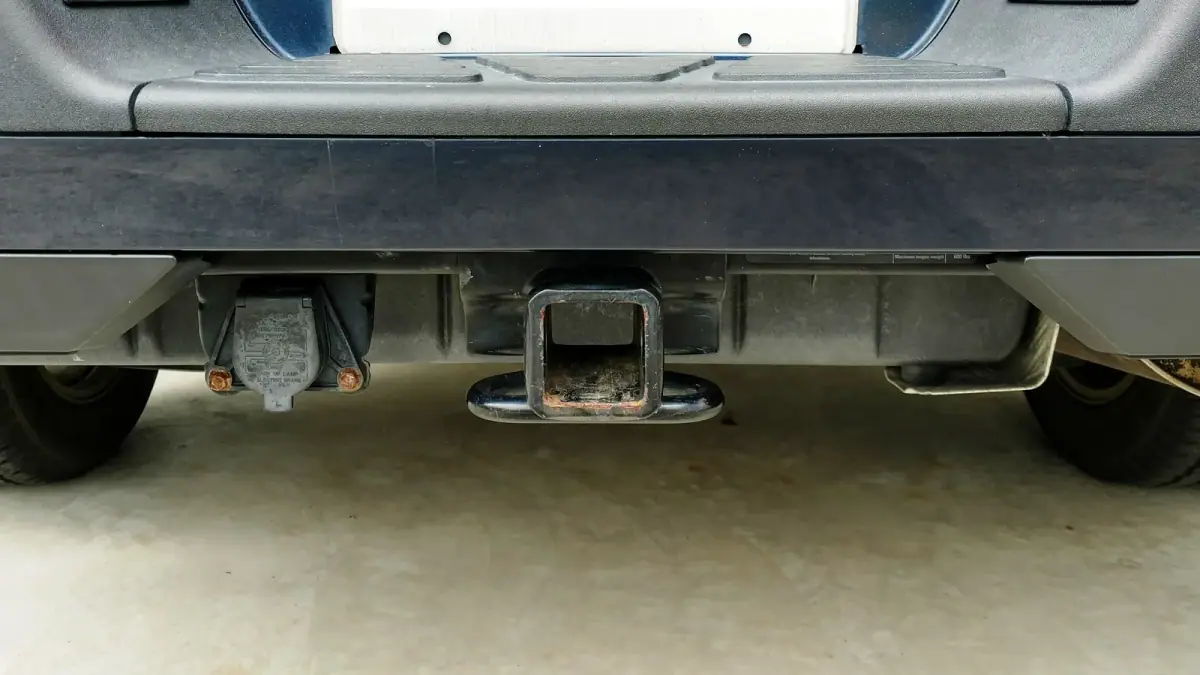
- Plug the tester into the 7-way socket at the back of the truck.
- Start the vehicle.
- Check 12 V: the indicator should be on constantly.
- Turn on the headlights: the taillight indicator should stay on constantly.
- Turn on the left signal: the left indicator should flash. Press the brake pedal: it should go steady.
- Repeat with the right signal.
- Shift into reverse: the back-up or auxiliary indicator should stay on constantly.
- Press the brake pedal or the manual override on the brake controller: the brake indicator should stay on constantly.
This is a live-or-dead check, so you do not need a meter. On the brake pin, some test lights and non-Tekonsha testers can make Tekonsha controllers report a short circuit.
GM's Trailering App and Ram's Trailer Light Check can cycle the lights for you with the trailer attached. GM says the app is no substitute for walking round the trailer, because it may miss partial outages.
If the brake circuit is dead at the plug and the fuse is good, the fault is usually in the controller's four wires under the dash. Ford's rule of thumb on the Maverick: a brake controller message with no trailer connected points to the truck's wiring, while one that appears only with a trailer attached points at the trailer.
Why lights or brakes stop working
Most faults are simple, usually a poor connection at a dirty socket. Redarc's Tow-Pro Elite manual adds a warning: never ignore a fault indication, because wiring faults get worse and can cost you trailer braking.
Check these first:
- Dirt and corrosion in the socket. Mud, salt and water left in the connector can loosen the harness and damage the vehicle, GM warns. Make sure the plug and socket are clean and dry before connecting.
- A poor ground. CURT warns that a badly grounded adapter can overheat and cause a fire, and that the white wire of a vehicle 4-way will not carry the ground for a 6-way or 7-way.
- A missing fuse or relay in the truck, as above.
- A lamp-out warning with LED trailer lights. LEDs draw so little power that the truck can mistake them for a dead bulb. CURT sells adapters with built-in resistors for this.
Tip: Put dielectric grease on the connectors at the 7-way to keep moisture out and prevent corrosion, and put the waterproof cap back on whenever the plug is not in use. Brake control error codes caused by a wet connector clear once the connectors are taken apart and dried out.
Adapters, and the older 6-pin
If your trailer has a different plug, a plug-in adapter from the truck's 7-way to a 4-way flat, 5-way flat or 6-way round needs no cutting or splicing. The 6-way round has no reverse-light circuit, and its center pin varies even between CURT's own adapters: auxiliary power on some, brake lights on others. Match a 6-way trailer by function.
A 4-pin connector cannot run electric brakes at all, as Ford's 2026 towing guide confirms. That makes the 4-way the connector for light utility trailers at the bottom of the hitch classes, not for a camper with brakes. Adding a connector to a truck built without one means working in its wiring, and Honda says that should only be done by a qualified technician.
Common questions
What are the color codes for 7-pin trailer wiring?
Under the common RV-blade convention: white ground, green taillights, red left turn and brake, brown right turn and brake, blue electric brakes, black 12 volt and yellow reverse. Your truck or trailer may differ, so confirm each wire with a tester before connecting it.
What wires go where on a 7-way trailer plug?
Match each trailer wire to the truck circuit that does the same job, using the table above or your owner's manual. Pin numbers are no help, because each maker numbers them differently.
Does the 7-pin plug charge my camper battery?
Yes, while you drive, as long as the truck's conditions are met and the camper battery is not too flat. The limits vary by truck, so check the trailer section of your manual.
How do I test a 7-pin trailer plug?
Plug a 7-way tester into the truck's socket with the engine running and work through the lights, reverse and the brake circuit. It shows which circuit is dead, not its voltage.