The class says what a motorhome is built on, not how big it is. A Class A sits on a bare truck or bus-style chassis, a Class B is a van conversion, and a Class C is built on a cutaway truck or van chassis, usually with a bunk over the cab.
Class A, B and C Motorhomes Explained: What Each Is and Who It Suits
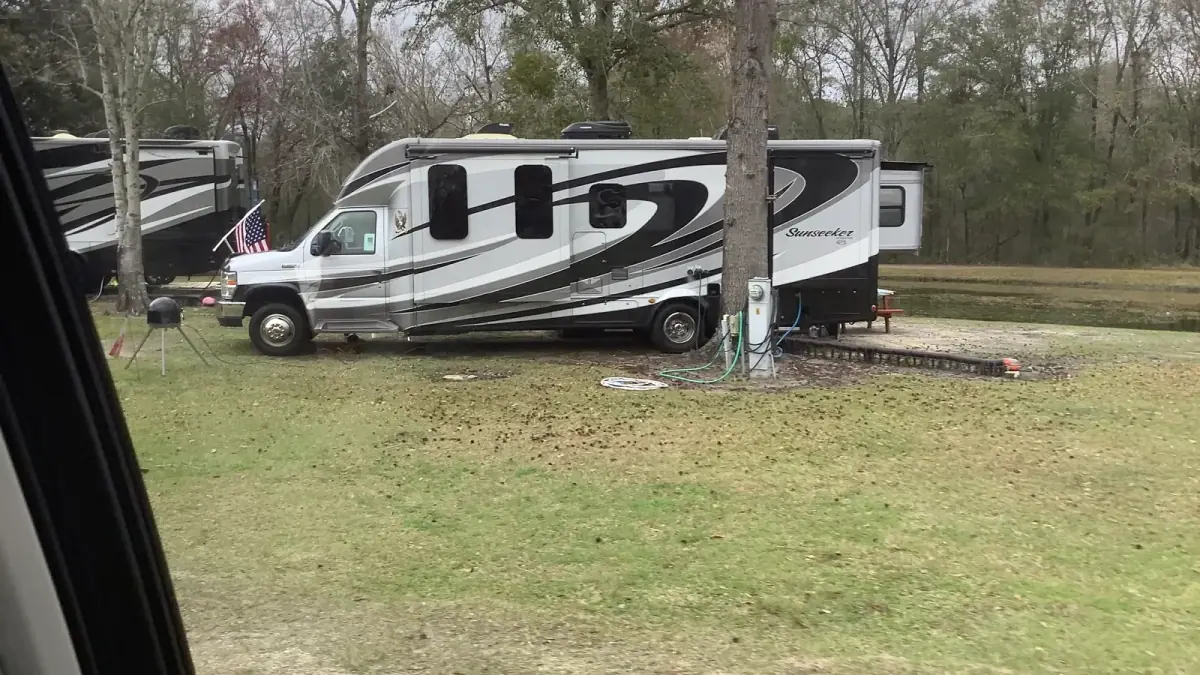
At a glance
- The class comes from the chassis, not the length. Winnebago lists a 20 ft 4 in Class C, Airstream a 24 ft Class B.
- Easiest to drive and park: the Class B, which Jayco puts at 17 to 23 feet long and 7 feet wide.
- Towing a car: a gas Class C often carries the higher hitch rating. Jayco rates its gas Class C Redhawk at 7,500 lb and its longer gas Class A Alante at 5,000 lb.
On this page (8)
What makes a motorhome Class A, B or C
The RV Industry Association's definitions use the chassis and nothing else: a Type A is built on a bare motor vehicle chassis, a Type B on an automotive-manufactured van-type vehicle, a Type C on a cutaway automotive-manufactured truck chassis. The association writes "Type"; builders, dealers and buyers all say "Class", and they mean the same three things.
Nothing in those definitions mentions length, weight or towing. Go RVing, the association's consumer site, adds the detail most people recognize a Class C by: a wider body attached to the original cab, with the over-the-cab portion that is often a sleeping area. All three classes drive themselves, which is why Go RVing calls them the choice for people who do not own and do not want to buy a tow vehicle; the alternative is towing a travel trailer or a fifth wheel.
| Class | Built on | Example model | Length | What it can tow |
|---|---|---|---|---|
| A | Bare chassis, Ford F53 | Jayco 2027 Alante 29S, gas | 31 ft 4 in | 5,000 lb hitch |
| B | Van, RAM ProMaster 3500 | Jayco 2027 Swift 20T, gas | 20 ft 11 in | 3,500 lb hitch |
| C | Cutaway truck, Ford E-450 | Jayco 2027 Redhawk 26M, gas | 28 ft 8 in | 7,500 lb hitch |
Figures from Jayco's 2027 floorplan pages, one model per class. Other floorplans and other makers print different numbers, so treat these as examples of each class, not as the class limits.
Tip: Size does not decide the class. Winnebago builds the Elora and Resa, both Class C models, on the RAM ProMaster chassis at 20 ft 4 in, while Airstream's 2027 Interstate 24GT, a Class B on a Mercedes-Benz Sprinter 3500 chassis, is 24 ft. The shorter coach there is the Class C.
Class B: a van you can sleep in
Jayco calls Class B motorhomes the smallest type and builds them on the Ford Transit, RAM ProMaster and Mercedes-Benz Sprinter. Go RVing describes them as a fit for solo travelers and couples, sleeping up to four, and easy to maneuver, park and drive even in urban areas. Jayco's own 2027 camper vans sleep two.
What you give up is room. At 7 feet wide and 9 to 11 feet high, Jayco says these vans usually have no trouble with height clearances, but the kitchen, bath and bed all share one tube. Fuel type follows the donor van: the ProMaster-based Swift 20T runs a 3.6L V6 on gas with a 24 gal tank, while the Sprinter-based Terrain 19Y is a diesel with 24.5 gal.
Class C: the cutaway with the bunk over the cab
Winnebago describes the Class C as splitting the difference between a Class A coach and a camper van, with a familiar automotive-style driving experience and the cabover space used for sleeping or storage. Jayco says Class Cs suit buyers who do not need a huge floorplan but do not want to feel cramped, and that many drivers find them as comfortable to handle as a large truck or cargo van.
Most gas Class Cs sit on the Ford E-450 cutaway: Winnebago's Minnie Winnie floorplans run 23 ft 10 in to 32 ft 9 in, all rated at 14,500 lbs loaded. Winnebago also builds Class Cs on van chassis, such as the 25 ft 8 in View and Navion on the Sprinter.
Above that line sits the Super C, a builder's term rather than an industry class. Jayco's Seneca 37K rides on a Freightliner S2RV Plus chassis with a Cummins 6.7L diesel, measures 39 ft 4 in and is rated 31,000 lbs loaded, which is above the 26,000 lb line Pennsylvania uses for a noncommercial Class B license.
Tip: Length and towing do not move together. On these two Jayco coaches the Ford E-450 cutaway under the gas Class C Redhawk 26M, 28 ft 8 in, carries a 7,500 lb hitch, while the longer gas Class A Alante 29S, at 31 ft 4 in, carries 5,000 lb. Other floorplans and makers print different figures.
Class A: the bus-style coach
Jayco builds its Class A models on a bus or semi-truck platform and says they are typically taller, wider and longer than a Class C, with room for bigger kitchens, bathrooms, common areas and bedrooms and more residential-style features. Winnebago's Class A range runs 28 ft 5 in to 41 ft 4 in, in gas and diesel.
Gas Class As such as the Winnebago Vista use the Ford F53 chassis with the 7.3L V8. Diesels are a different animal: the Forza rides a Freightliner XCS chassis with a 340-hp Cummins 6.7L, and the Journey 34N is a diesel pusher rated 36,400 lbs loaded. The house side of a big coach brings its own questions, including what size generator it needs.
The trade-off Jayco states plainly is access: the smaller footprint of a Class C gives better maneuverability in parks, urban areas and parking lots. Weight is the other one, because the heaviest Class As cross state license thresholds.
Which one is easiest to drive and park
Jayco's answer is the Class B, and the reasoning is size: a camper van is close to a van or large SUV, with a length similar to a pickup truck, which makes narrow streets, parking lots and campground loops manageable. Winnebago describes camper vans as nimble and more car-like to drive than larger motorhomes.
Any motorhome still behaves unlike a car. Jayco's 2025 Class C owner's manual warns that the turning radius is longer, that road clearance and other traffic need checking in a turn, and that stopping distance is greater than an automobile's. Go RVing notes that the cockpit controls look similar to an average car, but cameras and driver aids vary by model, so check what a given coach actually has.
Towing a car behind a motorhome
All three classes can tow, and the figure that matters is what the builder prints for the exact model. Published hitch ratings for current coaches:
- Class B: 3,500 lb on the ProMaster-based Jayco Swift 20T and Winnebago Travato, 5,000 lb on the Sprinter-based Jayco Terrain 19Y.
- Gas Class A: 5,000 lb on the Jayco Alante 29S and on the Winnebago Vista, whose hitch is also limited to 500 lb of vertical tongue weight.
- Gas Class C: 7,500 lb on the Jayco Redhawk 26M and the Winnebago Minnie Winnie; Thor prints 8,000 lb for the Four Winds 28Z.
- Diesel Class A and Super C: 10,000 lb on the Winnebago Forza and Journey, 12,000 lb on the Jayco Seneca 37K.
The hitch number is a ceiling, not a promise. Winnebago's own footnote says actual towing capacity depends on how the coach is loaded, on its weight ratings and on adequate trailer brakes. Jayco's manual puts it arithmetically: weigh the towed vehicle separately, add it to the motorhome's loaded weight, and keep the total under the GCWR, the most the motorhome and whatever it tows may weigh together. The tongue weight of the towed vehicle counts against the motorhome's cargo. The same principle governs how you find a towing capacity on any vehicle.
Tip: Your own coach's towing and braking label is on the rear bumper above the hitch receiver, per Jayco's Class C manual. The manual also warns that a reducing sleeve, a smaller-diameter draw bar or a longer draw bar lowers the hitch rating, and that a draw bar longer than 18 inches is prohibited.
Brakes on the towed car are a separate requirement. Jayco states that a motorhome's braking capacity is not necessarily as great as its towing capacity, that a separate braking system should be used for a towed car, trailer or boat, and that requirements vary by chassis type, chassis maker and state law. Fitting or modifying hitch hardware on the chassis is work for a qualified RV or truck shop. General towing safety guidance is on NHTSA's towing page.
Do you need a special license?
For most motorhomes a regular driver's license is enough, Go RVing says, but requirements vary by state and a small number of states add a test for very large coaches. Jayco points at the common threshold: some states restrict driving vehicles rated over 26,000 lbs. Check your own state's rules before you buy, and again before a long trip, because only two states' rules are described below.
Pennsylvania sets the line by weight: a noncommercial Class B license is required to operate any single vehicle rated over 26,000 pounds, and PennDOT's own example is a motor home rated at 26,001 pounds or more. Several real coaches cross it, including the Winnebago Forza 36H at 27,910 lbs and the Jayco Seneca 37K at 31,000 lbs.
California sets it by length instead. A basic Class C license covers any housecar of 40 feet or less; over 40 feet and up to 45 feet requires a noncommercial Class B with an endorsement. California also limits what a Class C holder may tow to a single vehicle rated 10,000 lbs or less, including a tow dolly, and the state's vehicle code restricts housecars over 40 feet to specified highways and one mile either side of them for fuel, food or lodging.
Common questions
What is the difference between a Class A, B and C RV?
The difference is the chassis the coach is built on, and nothing else: that is the only criterion in the RV Industry Association's definitions. Length, weight and towing vary by model within every class.
What are the disadvantages of a Class C RV?
Rooms are smaller than in a comparable Class A, which Jayco builds on a bus or semi-truck platform. A Class C is also more vehicle to park and store than a camper van, since Winnebago's Minnie Winnie floorplans reach 32 ft 9 in.
Which RV class is easiest to drive?
Jayco says the Class B, because its overall length is close to a pickup truck's and most drivers are already used to that footprint. Jayco also lists better fuel efficiency and easier parking than larger motorhomes.
Can a Class B motorhome tow a car?
Many are rated to: Jayco's 2027 Swift 20T and Winnebago's Travato print a 3,500 lb hitch rating on the RAM ProMaster chassis, and Jayco's Sprinter-based 2027 Terrain 19Y prints 5,000 lb. Confirm the figure for your own van on its towing and braking label.