If your trailer comes off the hitch, a cable tied to the tow vehicle pulls a pin out of the breakaway switch, and the trailer's own battery sends power straight to its electric brakes. No truck power and no brake controller are involved. The brakes stay on until the pin goes back in.
The Trailer Breakaway Switch: What It Does, Testing It, and Its Battery
Some links on this site are affiliate links: if you buy through them we earn a commission, at no extra cost to you. As an Amazon Associate we earn from qualifying purchases.
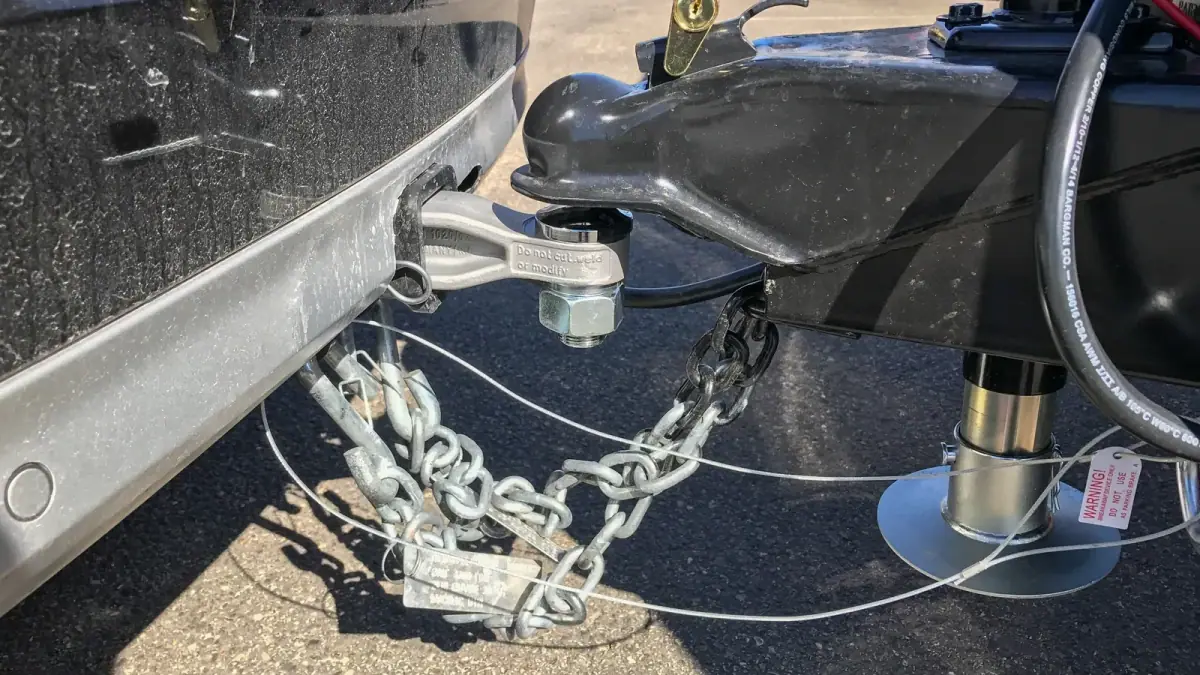
At a glance
- What it does: the pulled pin closes a circuit between the trailer battery and the trailer brakes, so a loose trailer stops itself.
- Testing: unplug the trailer's 7-way plug from the truck, pull the pin, confirm the brakes hold, then push the pin fully back in.
- Do you need one: many states require automatic breakaway braking above 3,000 lb gross trailer weight, but the rules vary by state.
On this page (7)
What the breakaway switch does
It is an emergency brake for a trailer that has come loose. When the trailer separates, a steel cable pulls the pin free, two contacts in the switch meet, and the circuit between the trailer battery and the trailer brakes closes immediately.
It works on its own: the brake controller in the cab handles normal braking, and the breakaway circuit takes over only when the pin is out. The trailer must have electric brakes for it to work. If only the hitch ball comes out of the coupler, the safety chains and the 7-pin plug stay connected, and the switch should not engage.
The pin, the cable and where it attaches
Where you clip the cable decides whether it works. The switch sits on the A-frame of a travel trailer or near the pin box of a fifth wheel, and the cable, or lanyard, goes to the tow vehicle:
- Attach it to a permanent part of the tow vehicle, such as the frame or a non-removable part of the hitch.
- Never hook it to the hitch ball or the safety chain loop, and keep it clear of the ground (Tekonsha and CURT).
- Make it longer than the extended safety chains, with enough slack for a tight turn, or the pin can pull out and apply the brakes while you are towing.
Tip: Some kit sheets contradict themselves on the anchor point. Where a kit sheet and your RV builder's manual disagree, follow the builder's manual.
How to test it
Test it before every trip; it takes a minute. Keystone's 2027 manual gives the test sequence:
- Disconnect the 7-way cord from the RV to the tow vehicle. Leaving it plugged in can throw an error or damage the brake controller.
- Pull the lanyard pin out.
- Listen: the brakes should audibly engage.
- Move the tow vehicle forward slightly to confirm the trailer brakes are holding.
- Reinsert the pin as soon as possible to deactivate the switch.
Tip: Do not leave the pin out for more than a few minutes. Using the switch as a parking brake runs down the battery and can damage the switch contacts and the brake magnets.
The battery that powers it
The switch is only as good as the battery behind it. In the builders' manuals it runs off the RV's 12 V battery, which must be fully charged. Keystone points you to your RV dealer for the right one; Winnebago, Jayco and Grand Design say an auxiliary battery must be installed to power it. The switch label Winnebago and Grand Design describe asks for at least the equivalent of an automotive 12 V, 12 Ah wet-cell battery.
Self-contained breakaway kits carry their own small battery and charge it from the 12 V auxiliary pin in the 7-way connector while the tow vehicle runs. CURT puts average life at 9 to 12 months on a charge, and its push-to-test button checks the charge before a trip. For storage, Dexter says to take the battery inside and charge it at least every 90 days.
Tip: Winnebago's routine: every 3 months, pull the pin, oil it lightly and spray the inside of the switch with electrical contact cleaner. Tekonsha recommends replacing the device every 3 to 5 years.
Do you need one
In most states, yes, above a set weight. Florida requires trailers over 3,000 lb gross weight to have brakes that apply automatically on breakaway and stay applied for at least 15 minutes, and Montana uses the same wording. Virginia's inspection rule fails a trailer whose breakaway device is missing, does not work or has a frayed cable.
Thresholds and dates vary, and some states say nothing about breakaway at all, so read your own state's rule. The weight at which a trailer needs brakes in the first place is a separate question, covered with the controller.
When it does not work
No brakes when you pull the pin means no emergency brake on the road. Check that the trailer battery is connected and fully charged, then that the brakes are correctly adjusted, then see a dealer. A corroded switch, a cable damaged from dragging, or an open or short circuit can also leave you with no brakes, so inspect the wiring and connections now and then. Brakes that drag or grab unevenly are a brake and bearing issue, not a switch issue. Do not tow with a breakaway switch you know is faulty.
Common questions
How does a trailer breakaway switch work?
Pulling the pin connects the trailer battery straight to the electric brake magnets. The truck plays no part in it.
Do you need a breakaway switch on a trailer?
Most likely, if the trailer is over about 3,000 lb gross weight. Check the rule where your trailer is registered and in each state you travel through.
Why is my trailer breakaway switch not working?
The switch has no power of its own, so start with the trailer battery. If the battery is good and the brakes still do not hold, have the switch, wiring and brake adjustment checked.
How do I reset the breakaway switch on my RV?
Push the pin fully home until it sits flush with the switch body, which releases the brakes, then reconnect the 7-way cord. If the pin was out for more than a few minutes, charge the battery before you tow.